
Abstract
AI tools for ecommerce help brands improve product discovery, buyer confidence, conversion, support, and customer journeys.
We grouped the tools by the part of the ecommerce journey they influence most: proactive sales guidance, product discovery, personalization, AI-native storefronts, and the catalogue or trust infrastructure that supports buying decisions.
The top AI tools for ecommerce include:
- Melingo
- Rep AI
- Konvo AI
- Gorgias AI Agent
- Constructor
- Zoovu
- Miros
- Algolia
- Nosto
- FERMÀT
- Rebuy
- New Gen
- Lily AI
- Klaviyo
- Bazaarvoice
Better buying journeys are the goal of AI adoption. Shoppers browse, compare, hesitate, and question whether the product fits their needs. Too often, they leave before they get an answer.
That is the problem AI tools for ecommerce should solve. Not adding AI for the sake of it, but helping you turn expensive traffic into confident purchasing decisions. As a result, consumer expectations are moving in that direction, and the most valuable AI tools help recover revenue at the moment shoppers hesitate.
DHL’s 2025 E-Commerce Trends Report found that 70% of shoppers want AI-driven shopping tools, including virtual try-ons and voice search, to guide purchase decisions. For enterprise ecommerce teams, the question is which commercial problem the tool solves: poor product discovery, low buyer confidence, abandoned carts, or missed service-to-sales opportunities.
This guide compares the best AI tools for ecommerce by use case, so you can shortlist the right platforms for your customer journey.
What are AI tools for ecommerce?
AI tools for ecommerce are software platforms that use artificial intelligence to improve how shoppers find, evaluate, buy, and receive products online.
Some tools improve search and product discovery. Others support AI personalization in ecommerce, enrich product catalogues, automate support, generate AI-native shopping journeys, or guide shoppers through complex buying decisions.
The strongest tools help ecommerce teams solve revenue problems across the journey. AI tools for ecommerce are most useful when your brand has a real journey problem to solve. They are less valuable when the site has low traffic, a tiny catalogue, weak product-market fit, or no clear owner for testing and optimization.
Top Picks at a Glance
- Recommended for proactive AI sales agents: Melingo
- Recommended for AI product discovery and guided catalogue navigation: Constructor
- Recommended for AI personalization, merchandising, and conversion optimization: Nosto
- Recommended for AI-native storefronts and agentic commerce: New Gen
- Recommended for AI-readable catalogue, lifecycle, and trust infrastructure: Lily AI
Best AI Tools for Ecommerce Compared
| Tool | Category / revenue use case | Best for | Proactivity type | Catalogue complexity fit | Service-to-sales handoff | Pre-deployment validation | Merchant control |
| Melingo | Proactive AI sales agents | Enterprise and high-consideration catalogues | Hesitation-based proactive engagement | High | Strong | Simulator / readiness validation | Commercial Playbook |
| Rep AI | AI shopping assistant | Growth-focused ecommerce brands | Behavior-triggered chat engagement | Medium | Sales assistance and post-purchase support | Not clearly documented | On-brand agent controls |
| Konvo AI | Ecommerce customer conversation automation | Support automation with light sales potential | Conversational support automation | Medium | Support-to-sales oriented | Not clearly documented | AI customer platform controls |
| Gorgias AI Agent | Conversational AI for ecommerce support and sales | Brands already using helpdesk-led CX | Support-first, with shopping assistant features | Medium | Strong support workflows | Training and optimization workflows | Helpdesk and workflow controls |
| Constructor | AI product discovery | Enterprise search, browse, recommendations | Search and discovery optimization | High | Limited | Not primary focus | Merchandising tools |
| Zoovu | Guided selling and product discovery | Product advisors and complex configuration | Guided flows and recommendations | High | Limited | Not primary focus | Assistant and flow controls |
| Nosto | Personalization and merchandising | Personalized experiences across search, content, and recommendations | Behavior-led personalization | Medium | Limited | Not primary focus | Merchandising controls |
| Miros | Visual and behavioral product discovery | Visual categories where shoppers struggle to describe intent | Behavior and visual-signal discovery | Medium | Limited | Not primary focus | Discovery configuration |
| New Gen | AI-native storefronts | Brands preparing for generative and agentic commerce | Conversational storefront experience | Medium | Limited | Not primary focus | Brand/product-data controls |
| FERMÀT | AI-native commerce journeys | Paid traffic landing experiences and personalized shops | Behavior-led journey generation | Medium | Limited | Not primary focus | Journey optimization controls |
| Lily AI | Catalogue and product-content infrastructure | Product attribution and search relevance | Behind-the-scenes enrichment | High | No | Not primary focus | Attribute and metadata control |
| Algolia | AI search and recommendations | Large ecommerce catalogues that need faster product discovery | Search-led discovery and recommendations | High | No | Not primary focus | Search, ranking, and recommendation controls |
| Rebuy | Cart personalization and AOV optimization | Shopify brands focused on cart conversion, upsells, and cross-sells | Cart-stage personalization | Medium | No | Not primary focus | Smart Cart and merchandising controls |
| Klaviyo | Lifecycle marketing and retention | Ecommerce brands using email, SMS, WhatsApp, and customer data for repeat purchase | Post-visit and lifecycle engagement | Medium | Limited | Not primary focus | Campaign, segmentation, and automation controls |
| Bazaarvoice | Reviews, UGC, and shopper trust | Brands that need ratings, reviews, UGC, and AI-readable trust signals | Trust-led discovery and validation | Medium | Limited | Not primary focus | Review, UGC, and syndication controls |
Top 15 AI Tools for Ecommerce
Proactive AI Sales Agents: Sales-Led, Not Support-Led
1. Melingo
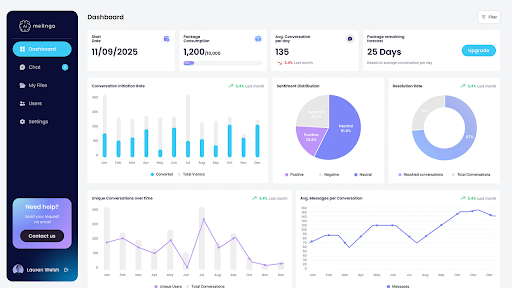
Melingo is an agentic ecommerce infrastructure platform that gives enterprise brands a Digital Sales Workforce: AI sales agents designed to recreate the expertise and proactivity of a strong human salesperson online. It is built for complex, technical, or high-consideration catalogues where shoppers often need guidance before they buy.
Built by the team behind Encyclopædia Britannica, Melingo brings an accuracy-first heritage to AI sales guidance. That matters for enterprise ecommerce brands that need reliable product recommendations, policy-aware conversations, and brand-safe guidance across complex catalogues.
Melingo focuses on closing the Conversion Gap. Physical stores can convert up to 40% of visitors through human interaction, while ecommerce sites often convert around 2–3%, a 10–15x gap. Melingo’s AI sales agents identify hesitation, start guided buying conversations, recommend products, support comparisons, answer questions, and move shoppers toward cart or checkout before they bounce.
The platform combines proactive engagement, catalogue awareness, merchant control, pre-deployment validation, and a Service-to-Sales Bridge, so the same agentic system can answer shopper questions, resolve service moments, and guide buyers back toward a purchase when the moment is right.
Main features
- Digital Sales Workforce for enterprise commerce.
- Proactive shopper engagement based on hesitation signals.
- Guided buying conversations and product recommendations.
- Commercial Playbook for merchant control over priorities, campaigns, and product pushes.
- Melingo Simulator for pre-deployment testing, policy fidelity, and reduced hallucination risk.
- Unified Sales-Service Bridge for resolving shopper questions and moving back into guided selling when appropriate.
- ToC-Driven Retrieval for navigating complex product information, manuals, specifications, and catalogue content.
Recommended for: Enterprise ecommerce brands with complex, technical, or high-consideration catalogues.
2. Rep AI

Rep AI brings AI shopping assistance into the live storefront experience. Its AI assistant engages shoppers across web chat, search, and on-site conversations, helping answer questions, recommend products, and guide visitors through the buying journey.
Key features:
- Proprietary behavioral AI
- On-site Sales Agent
- Web chat and search conversation layer
Recommended for: Ecommerce brands looking for an AI shopping assistant across web chat, search, and on-site conversations.
3. Konvo AI
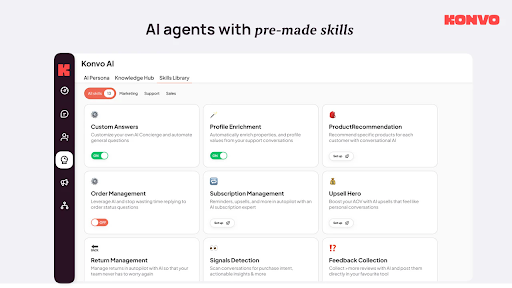
Konvo AI is best for ecommerce teams focused on enhancing customer support across high-volume, support-heavy journeys. Its core positioning is customer conversation automation for FAQs, orders, returns, and other repetitive ecommerce queries, with a focus on reducing support load while maintaining a premium customer experience.
Key features:
- FAQ automation
- Order and return workflows
- Multi-channel ecommerce conversations
Recommended for: Ecommerce teams that want to automate high-volume customer conversations across support and sales-service journeys.
4. Gorgias AI Agent
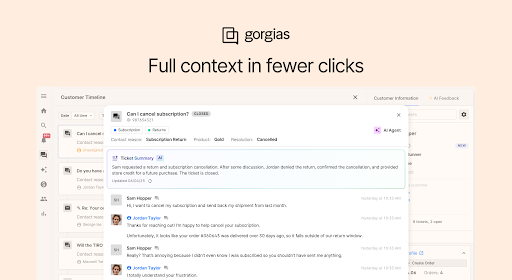
Gorgias AI Agent is strongest for brands that already run ecommerce CX through a helpdesk-led support model, with shopping assistance added around that support foundation. Gorgias AI Agent extends the Gorgias helpdesk into ecommerce chatbots and automation. Its AI Agent covers two roles: a post-purchase support agent for returns, order tracking, cancellations, and missing items, and a pre-purchase shopping assistant that engages shoppers across email, chat, and SMS.
Key features:
- Shopping Assistant
- Support Agent
- Handover, reasoning, and feedback controls
Recommended for: Ecommerce brands already using Gorgias that want to automate support while adding pre-purchase shopping assistance.
AI Product Discovery and Guided Catalog Navigation
5. Constructor
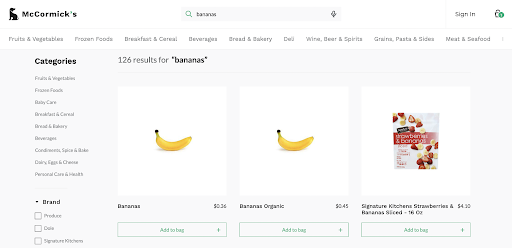
Constructor helps ecommerce teams improve how shoppers search, browse, and discover products. Its platform combines ecommerce search, autosuggest, browse, recommendations, collections, product insights, and merchant intelligence, with a clear focus on discovery performance.
Key features:
- Commerce Reasoning Engine
- Merchant Intelligence Agent
- AI Shopping Agent
Recommended for: Enterprise ecommerce teams that need AI-powered search, browse, recommendations, and product discovery.
6. Zoovu
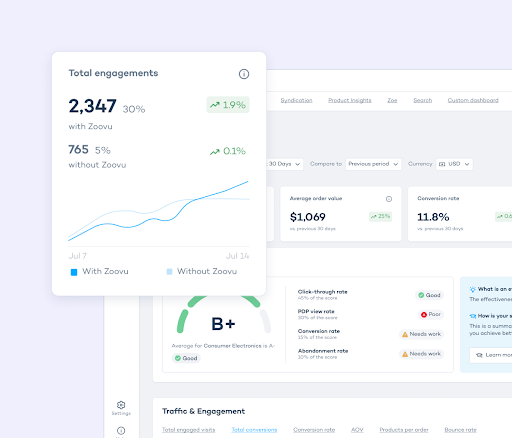
Zoovu is built around guided product selection. Its product advisors, guided selling flows, visual configurators, recommendations, semantic enrichment, and product data management help shoppers narrow complex options and match requirements to the right SKU. It works well for brands where the buying journey involves configuration, comparison, or a structured decision path.
Key features:
- Conversation Studio
- Visual Product Configurator
- Bill of Materials software
Recommended for: Brands with complex products that need guided selling, product advisors, and configuration support.
7. Miros
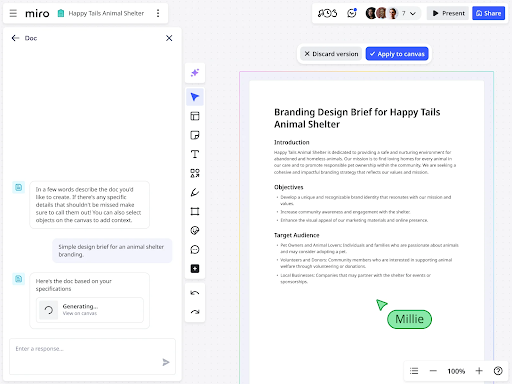
Miros is designed for visual discovery, especially when shoppers know what they like but cannot easily describe it in words. Its AI reads behavioral signals, builds real-time preference profiles, and extracts visual and semantic attributes from product images without manual tagging. For visual categories, it can help shoppers move from vague intent to relevant product options faster.
Key features:
- Real-time preference profiles
- Tagless visual attribute extraction
- Behavior-led discovery feed
Recommended for: Visual commerce brands where shoppers know what they like but struggle to describe it in search terms.
8. Algolia
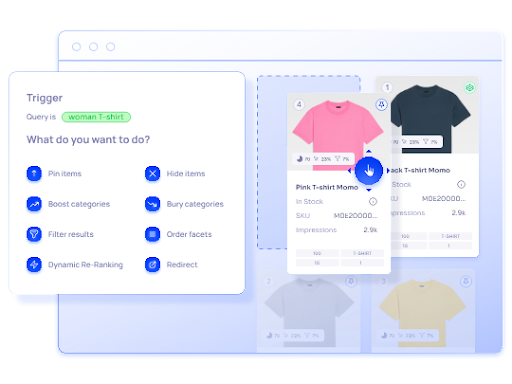
Algolia brings AI-powered search, discovery, and recommendations to ecommerce catalogues. Its AI search and retrieval platform supports search, browse, personalization, and recommendation models such as related items, trending items, frequently bought together, and personalized recommendations. It is a strong fit when shoppers need faster, more relevant routes to the right product.
Key features:
- AI Search and Retrieval
- AI Recommendations
- Frequently bought together and related-items models
Recommended for: Ecommerce teams that need AI-powered search, product discovery, and recommendations across large catalogs.
AI Personalization and Merchandising
9. Nosto
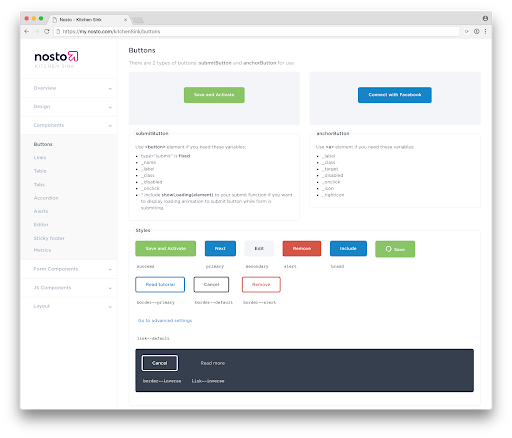
Nosto personalizes the ecommerce experience across search, merchandising, recommendations, content, and post-purchase moments. Rather than focusing on one interaction, it helps brands make more of the onsite journey feel relevant to each shopper.
Key features:
- Experience.AI
- Category merchandising rules
- Post-purchase upsell
Recommended for: Ecommerce brands that want AI-powered personalization across search, merchandising, recommendations, and post-purchase experiences.
10. FERMÀT
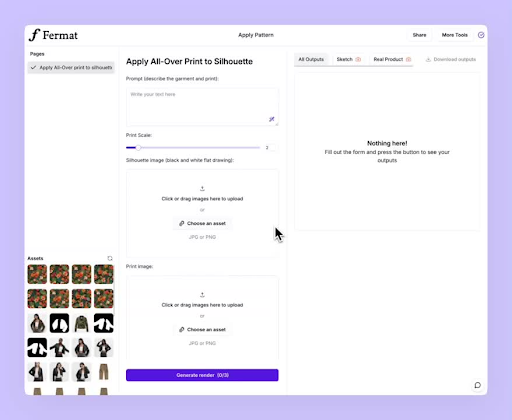
FERMÀT focuses on AI-native shopping journeys, particularly around paid traffic and conversion paths. Its platform uses shopper behavior to generate personalized ecommerce experiences for human and agentic consumers. For teams trying to turn campaign traffic into more relevant buying journeys, FERMÀT sits closer to landing-page conversion than traditional site search or support automation.
Key features:
- Commerce graph
- AI-powered commerce generation
- Behavior-led journey creation
Recommended for: Ecommerce teams that want AI-native shopping journeys for paid traffic, landing pages, and conversion paths.
11. Rebuy
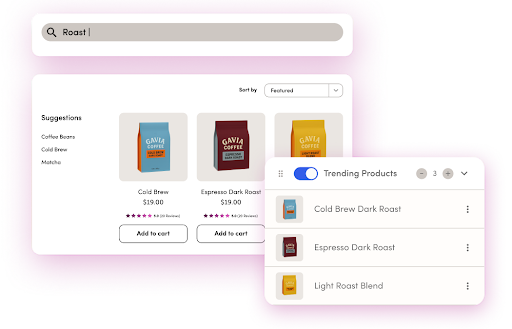
Rebuy targets the cart and AOV layer of the ecommerce journey. Its Smart Cart helps brands personalize the cart experience with AI-powered upsells, tiered rewards, gift-with-purchase offers, subscription switching, and merchandising widgets.
Key features:
- Smart Cart
- AI-powered upsells
- Merchandising Widgets
Recommended for: Shopify brands that want AI-powered cart personalization, upsells, and AOV optimization.
AI-Native Storefronts and Agentic Commerce Infrastructure
12. New Gen

New Gen is best for brands preparing for AI-native storefronts and agentic commerce experiences. It combines product data with AI-native generation to create content, interfaces, and insights for how shoppers search and buy in the AI era. As AI search and shopping agents influence product discovery, brands may also need generative engine optimization tools to understand how their products appear in AI-generated answers.
Key features:
- AI-native storefronts
- AI-readable catalogue structuring
- Generative commerce interfaces
Recommended for: Brands preparing for AI-native storefronts, generative commerce, and agentic shopping experiences.
AI-Readable Catalog and Trust Infrastructure
13. Lily AI
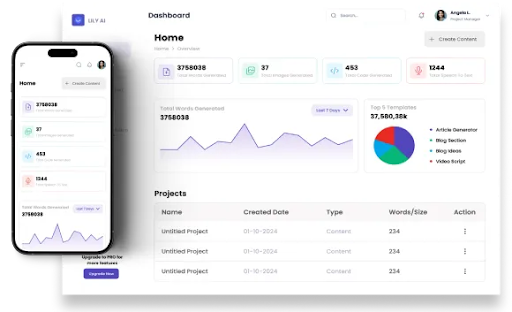
Lily AI strengthens the product data behind ecommerce discovery. It analyzes product images, descriptions, and clickstream data, then enriches products with shopper-oriented attributes, synonyms, trends, metadata, descriptions, and schema markup. Catalogue enrichment tools like Lily AI are especially valuable when brands need cleaner product data for search and broader AI data infrastructure tools.
Key features:
- Customer-oriented attribute taxonomy
- Synonym enrichment
- Trend-aware product metadata
Recommended for: Ecommerce brands that need richer product attributes, shopper-language tagging, and AI-readable catalogue data.
14. Klaviyo
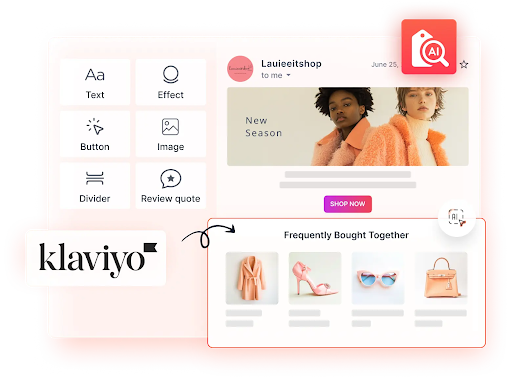
Klaviyo applies AI to lifecycle marketing and customer engagement across email, SMS, WhatsApp, and owned channels. Its K:AI layer supports marketing, service, and analytics workflows using real-time customer, product, and business data. It is not an on-site sales agent, but it helps brands continue the conversation after shoppers browse, buy, abandon, or return.
Key features:
- K:AI Marketing Agent
- AI-first B2C CRM
- Omnichannel email, SMS, and WhatsApp personalization
Recommended for: Ecommerce brands that need AI-powered lifecycle marketing, retention, and customer engagement.
15. Bazaarvoice
Bazaarvoice helps brands turn shopper content into trust and discovery assets. Its platform supports ratings, reviews, visual UGC, review syndication, and AI-readable shopper content through its Authentic Discovery API. As more product discovery happens in AI answers and zero-click search environments, ecommerce teams need product content that can be understood beyond the storefront.
Key features:
- Ratings and Reviews
- Visual UGC
- Authentic Discovery API
Recommended for: Ecommerce brands that want to turn reviews, UGC, and shopper Q&A into trust signals for buyers and AI discovery.
How We Compared These Tools
We compared these AI tools for ecommerce using publicly available information as of June, 2026, including official product pages, public announcements, and available third-party sources.
The criteria were:
- Primary use case
- Proactivity
- Catalogue fit
- Sales assistance
- Support automation
- Merchant control
- Governance and trust
We did not run hands-on tests for every platform. Where capabilities were not clearly documented, we avoided strong claims.
Turn Passive Traffic into Guided Buying Conversations
AI tools for ecommerce can improve search, personalization, product content, support, analytics, and conversion journeys. But the most valuable tools focus on the moment where revenue is actually at risk: when a shopper is browsing, comparing, hesitating, and deciding whether to continue or leave.
For enterprise brands with complex catalogues, that moment cannot be solved by another passive widget. It requires proactive guidance, catalogue awareness, merchant control, and trust.
Melingo gives ecommerce teams a Digital Sales Workforce: AI sales agents designed to recreate the expertise and proactivity of a strong human salesperson online. With Melingo, you can close the Conversion Gap between silent online browsing and guided in-store selling.
If your biggest gap is turning high-intent visitors into confident buyers, book a Melingo demo to see how a Digital Sales Workforce closes the Conversion Gap for complex ecommerce catalogues.